 Japanese
1Preparation
- Wash the strawberries, dry them completely with paper towels, then remove the green tops.
- Divide the red bean paste into 8 equal balls (about 25 g each).
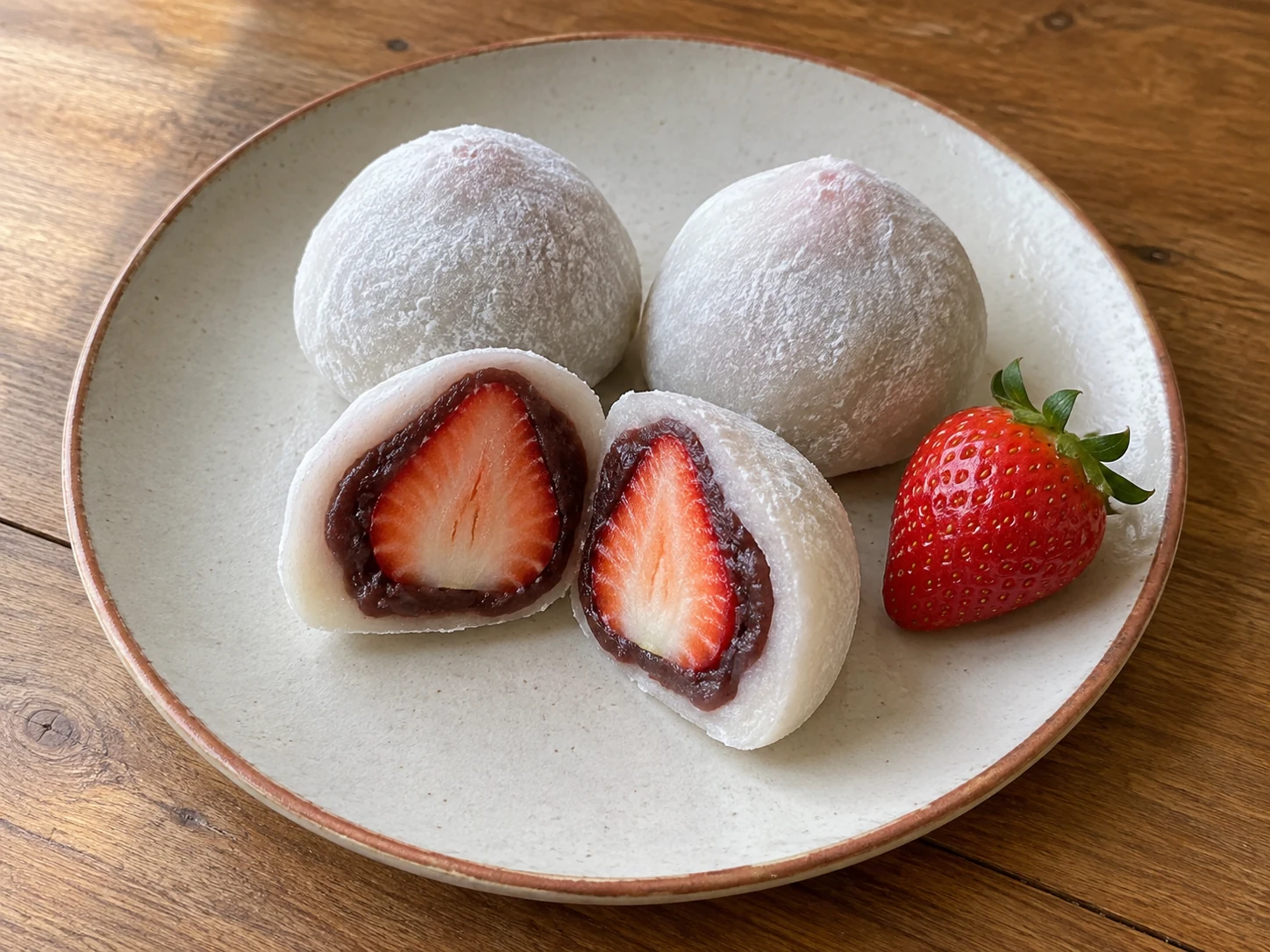
- Flatten each ball in your palm and wrap it around a strawberry, leaving the pointed tip showing.
- Dust a clean board or tray generously with cornstarch.
- Mix the glutinous rice flour and sugar in a small non-stick pot, then add the water gradually and stir until smooth and milky with no lumps.
2Cooking
- Cook, stirring constantly with a wet silicone spatula, until the mixture turns into a thick, glossy, slightly translucent and stretchy dough that gathers into one mass.
- Turn the dough out onto the dusted board and sprinkle a little cornstarch on top.
- While still warm, cut the dough into 8 equal pieces with a scraper or knife dusted with cornstarch.
- Stretch each piece with your fingers into an 8 cm round, thinner at the edges than in the centre.
- Place a wrapped strawberry tip-down in the centre, gather the edges over it and pinch until fully sealed.
3Serving
- Turn each daifuku seam-side down and brush off excess cornstarch with a soft brush.
- Serve whole, or halved with a sharp wet knife to show the strawberry; they are best eaten the same day.
💡 Tips & common mistakes
- Common mistake: leaving the strawberries wet, so the bean paste won't stick and they slide around inside the mochi. Dry them thoroughly.
- Work quickly while the dough is warm — mochi stiffens and becomes hard to stretch as it cools.
- Avoid refrigerating for long, as mochi hardens in the cold. If you must, wrap them well and take them out 30 minutes before serving.
🔁 Substitutions
- White sweet bean paste can replace the red bean paste for a milder flavour.
- You can cook the dough in the microwave: heat 1 minute, stir, 1 more minute, stir, then 30 seconds until translucent.