 Japanese
1Preparation
- Rinse the rice, swirling it with your hand and draining, 4–5 times until the water runs almost clear.
- Soak the rice in the measured water in the pot for 30 minutes.
- Sprinkle the salmon on both sides with 1 tsp salt, leave for 15 minutes, then pat dry with kitchen paper.
- Cut each nori sheet into 4 strips and keep them somewhere dry.
2Cooking
- Cover the rice pot and bring it to the boil.
- Turn the heat to the lowest setting and cook covered, without lifting the lid, until all the water is absorbed.
- Turn off the heat and leave the rice covered for 10 minutes, then fluff it gently with a wet spatula.
- While the rice cooks, put the salmon in a non-stick pan with no oil and cook for 4 minutes per side until golden and it flakes easily with a fork.
- Remove the salmon skin and any bones and flake the flesh into small pieces.
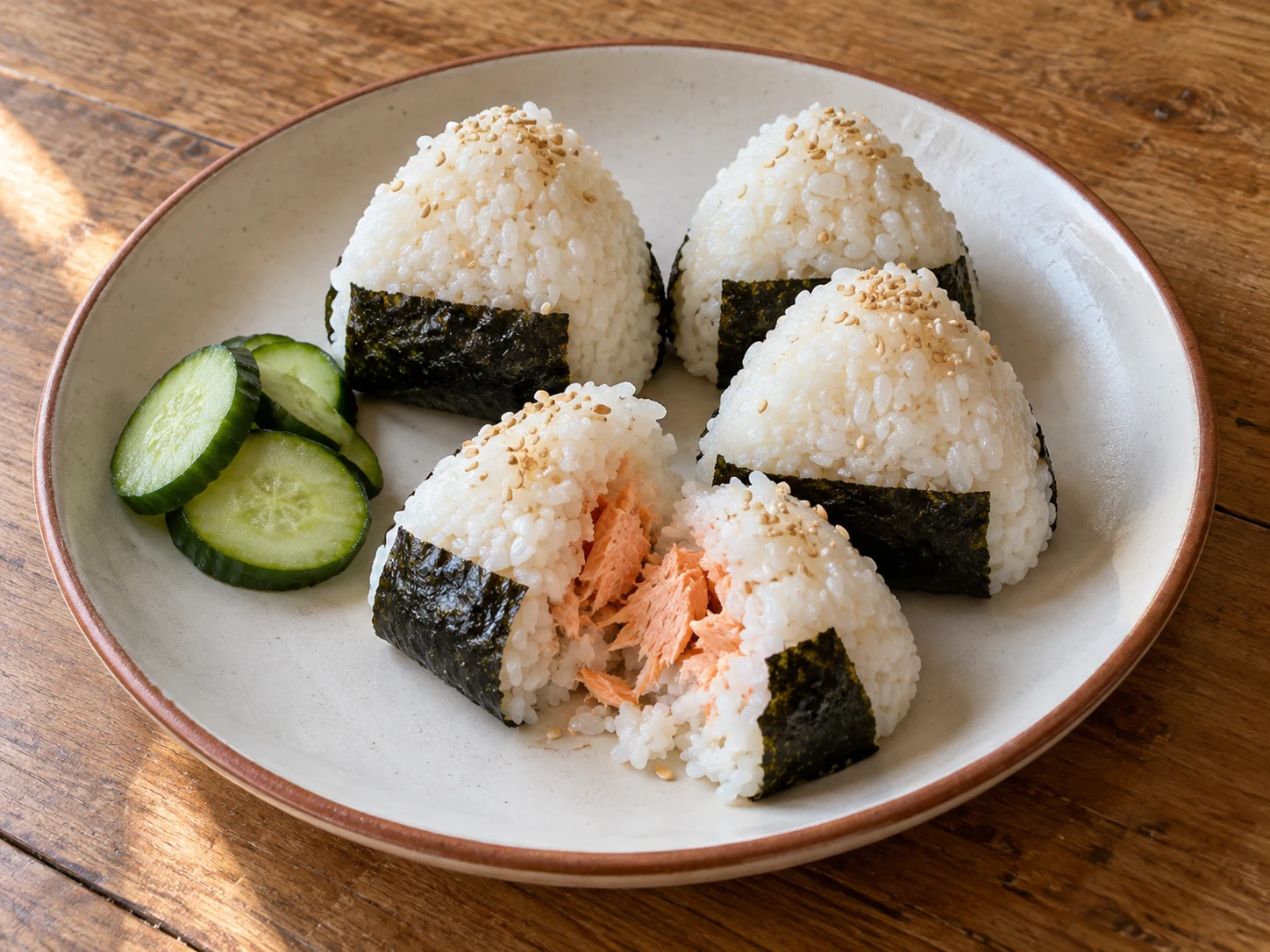
- Wet your hands, rub on a little salt, take an eighth of the warm rice, make a hollow in the middle and add 1 tbsp salmon, then cover with rice and press into a triangle with 3–4 firm squeezes.
3Serving
- Wrap a nori strip around the base of each triangle just before eating so it stays crisp, and sprinkle sesame on top.
- Serve warm or at room temperature, with cucumber slices or light pickles if you like.
💡 Tips & common mistakes
- Common mistake: shaping with dry hands or once the rice has cooled — it sticks to your fingers and the triangle falls apart. Shape it warm with wet hands.
- Press firmly but don't squeeze hard; too much pressure turns the rice into a dense, hard block.
- Long-grain rice such as basmati won't hold together; use Japanese short-grain rice.
- For lunch boxes, wrap each triangle in cling film without the nori, add the nori when eating, and eat the same day.
🔁 Substitutions
- Salmon: drained canned tuna mixed with a spoonful of mayonnaise, another well-known Japanese filling.
- Japanese rice: medium-grain Egyptian rice, though it holds together a little less well.