 Indonesian
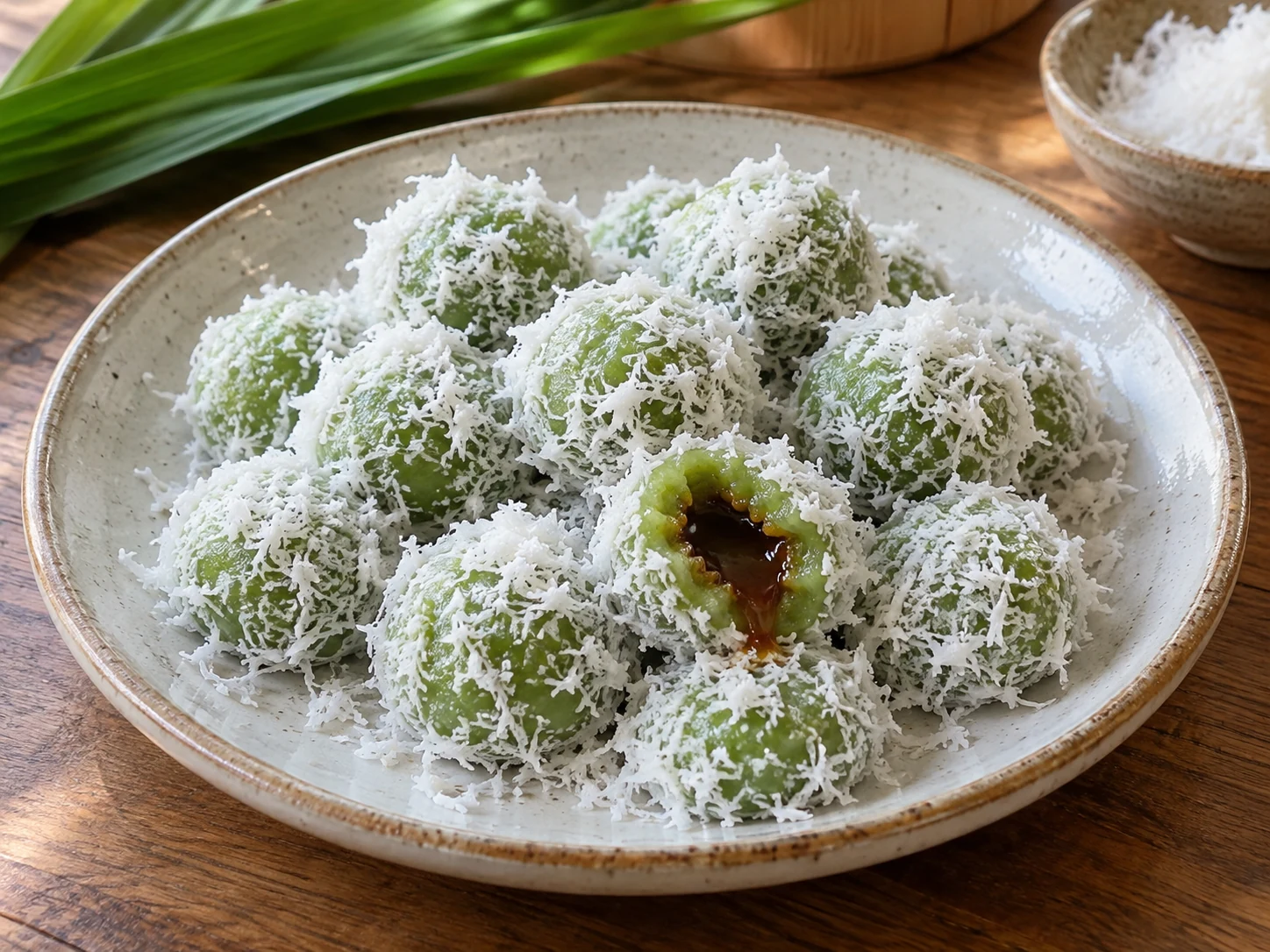
1Preparation
- Cut the pandan leaves into small pieces and blend them with the water until smooth and green.
- Strain the mixture through a fine sieve, pressing the leaves to get the green juice.
- Mix the coconut with 3 tbsp water and a pinch of salt and leave for 10 minutes to moisten.
- Mix the flour and salt, add the pandan juice gradually and knead into a soft, smooth dough that does not stick to your hands. You may not need all the juice.
- Take a walnut-sized piece of dough, flatten it in your palm and put ½ tsp of palm sugar in the centre.
- Bring the edges over the sugar, pinch them firmly closed, then roll into a smooth ball with no cracks. Repeat with the rest of the dough.
2Cooking
- Steam the moistened coconut until soft and fluffy, then spread it on a plate.
- Bring a pot of plenty of water to the boil.
- Drop the balls into the water in batches and cook until they float, then leave them 1 more minute so the sugar inside melts.
3Serving
- Lift the balls out with a slotted spoon and roll them, still warm, in the coconut until coated.
- Arrange them on a serving plate and serve warm or at room temperature the same day.
- Eat each ball whole in one bite, as the melted sugar runs out if you cut it.
💡 Tips & common mistakes
- Common mistake: leaving cracks in the ball — the sugar leaks into the water and the ball ends up empty. Seal the edges well and test one ball first.
- If the dough cracks when shaping, it is too dry; add 1 tsp of juice and knead again.
- The melted sugar inside is very hot, so let them cool a little before serving to children.
🔁 Substitutions
- Dark brown sugar can replace the palm sugar, though it is less fragrant.
- Replace the pandan leaves with ½ tsp pandan extract mixed into the same amount of water.
- Freshly grated coconut is even better than desiccated; steam it with a pinch of salt and no water.