 Saudi
1Preparation
- Mix the flour, sugar, yeast, baking powder, cardamom, cinnamon, ginger and salt in a large bowl.
- Add the melted ghee and rub it into the flour with your fingertips until it looks like damp sand.
- Add the warm milk gradually and knead gently until you have a soft dough that no longer sticks to your hands.
- Cover the dough and let it rest for 30 minutes in a warm place.
- Knead the date paste with the ghee and cardamom by hand until soft and even.
- Divide the dough into equal walnut-sized balls, and the date paste into the same number of smaller balls.
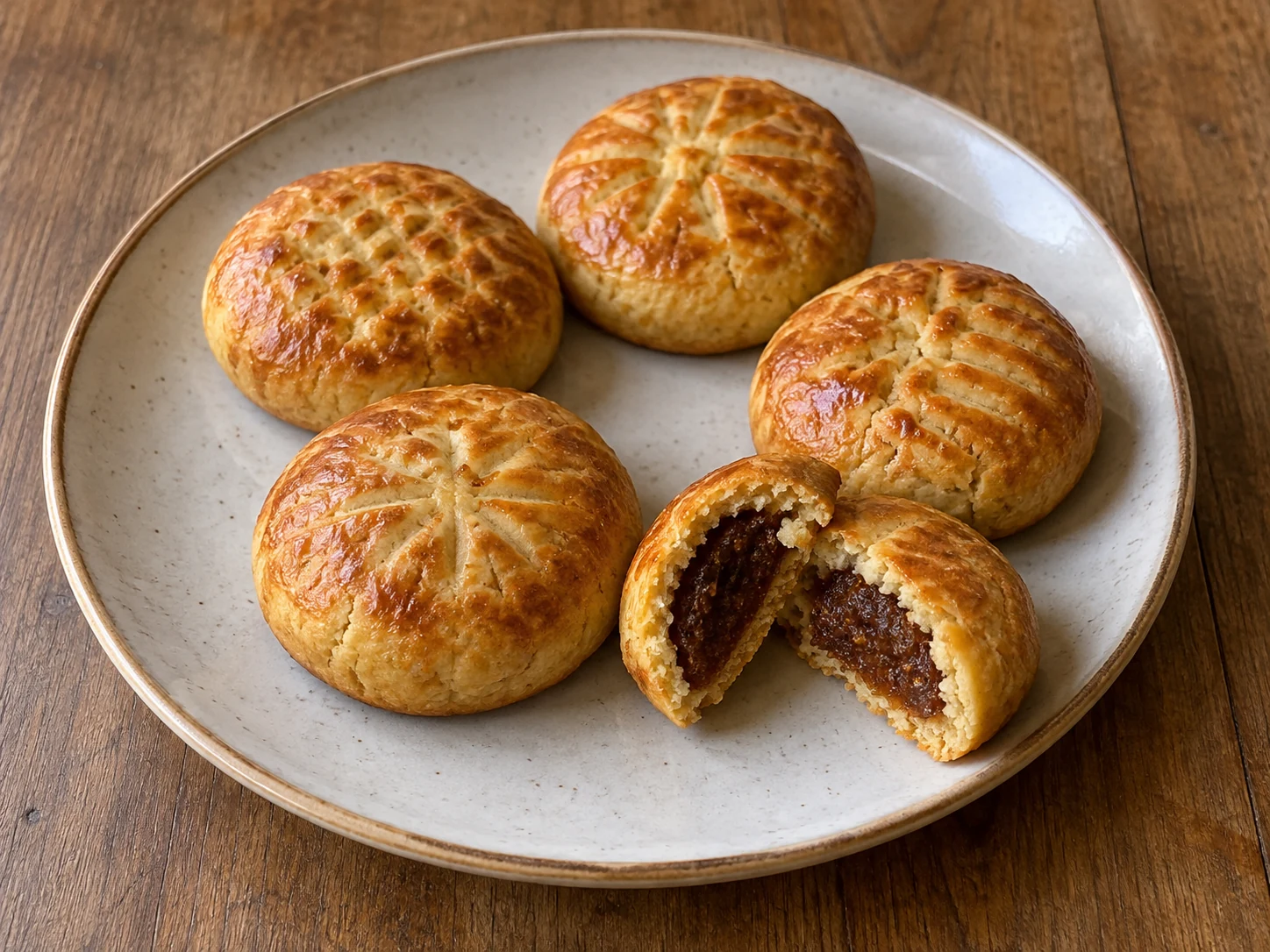
- Flatten a dough ball in your palm, set a date ball in the centre, then bring the edges up over it and roll until smooth.
- Press each ball into a disc about 1 cm thick and stamp the top with a kleija mould or the tines of a fork.
- Arrange the discs on a baking tray lined with baking paper, leaving space between them, and heat the oven to 180 °C.
- Beat the egg with the saffron and brush it over the tops of the discs.
2Cooking
- Bake the first tray on the middle shelf until the tops and bottoms are golden.
- Bake the second tray the same way.
3Serving
- Let the kleija cool on a rack for 15 minutes; they firm up and turn more tender as they cool.
- Arrange them on a serving plate and serve with Arabic coffee or tea.
- Store leftovers in an airtight container for up to a week.
💡 Tips & common mistakes
- Common mistake: over-kneading or adding too much milk makes the kleija hard. Knead only until the dough comes together.
- If the date paste is stiff, warm it for a few seconds in the microwave before kneading it with the ghee.
- Do not bake until dark — kleija dries out and hardens once cool.
🔁 Substitutions
- Replace half the white flour with whole wheat flour for a flavour closer to old-style home kleija.
- Melted butter can replace the ghee.